
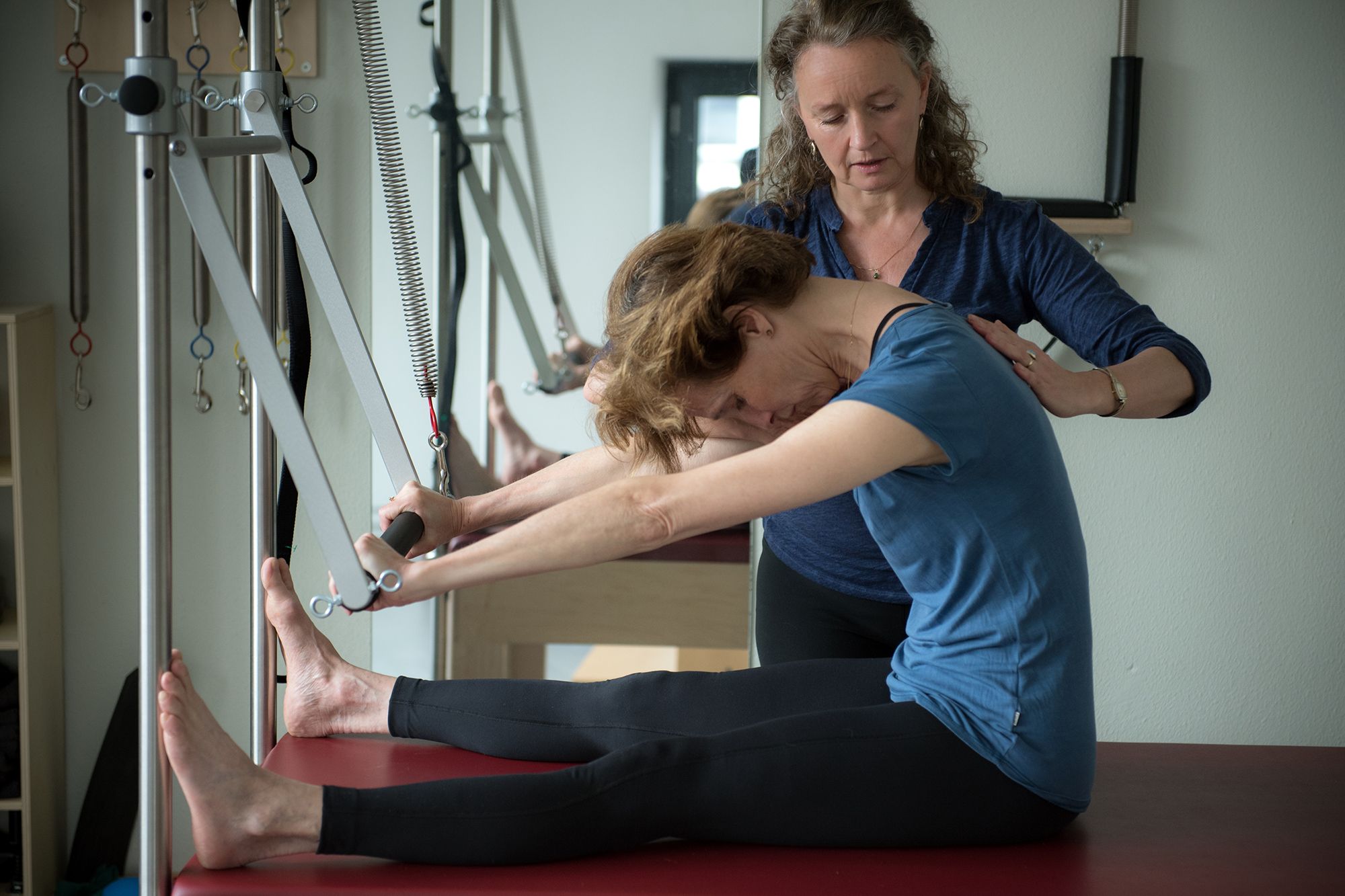
The thoracic spine is the area of the spine connected to the ribs. Each rib has its own joint to connect to its own vertebra. The ribcage reaches around the heart and lungs towards the front of the body where it connects to the sternum, with cartilage, making movement available for the ribs.
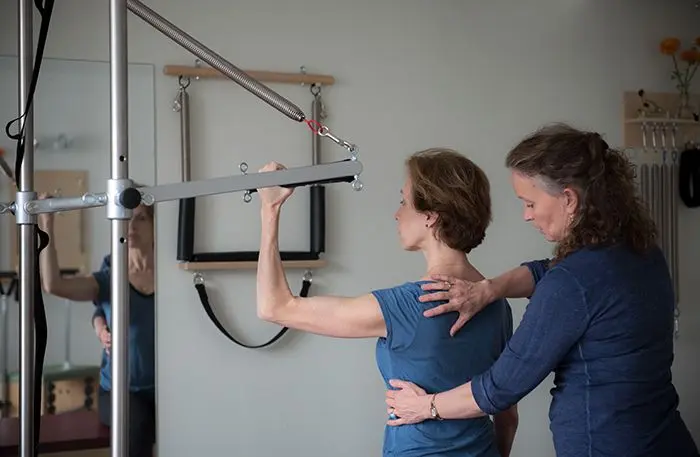
As a structure of protection for our vital organs heart and lungs, the ribcage needs to be strong, but not rigid. The breath initiates movement of the ribs, trunk muscles, and organs, all the way up to the shoulder girdle and down to the pelvic floor. When the shoulders are pressed down, or the ribs are ‘over’ closed, this movement becomes restricted. This will influence movement along the whole spine.
If you look at the spine, and observe how the vertebrae at different levels of the spine have different shapes, you can imagine that the different areas allow for different movement ranges. The cervical spine is most mobile, and in all directions. The thoracic is far less mobile ( because of its attachment to the ribcage). It has relatively most movement available in rotation, but also flexion and extension is available, yet especially extension is often under-used in the Thoracic.
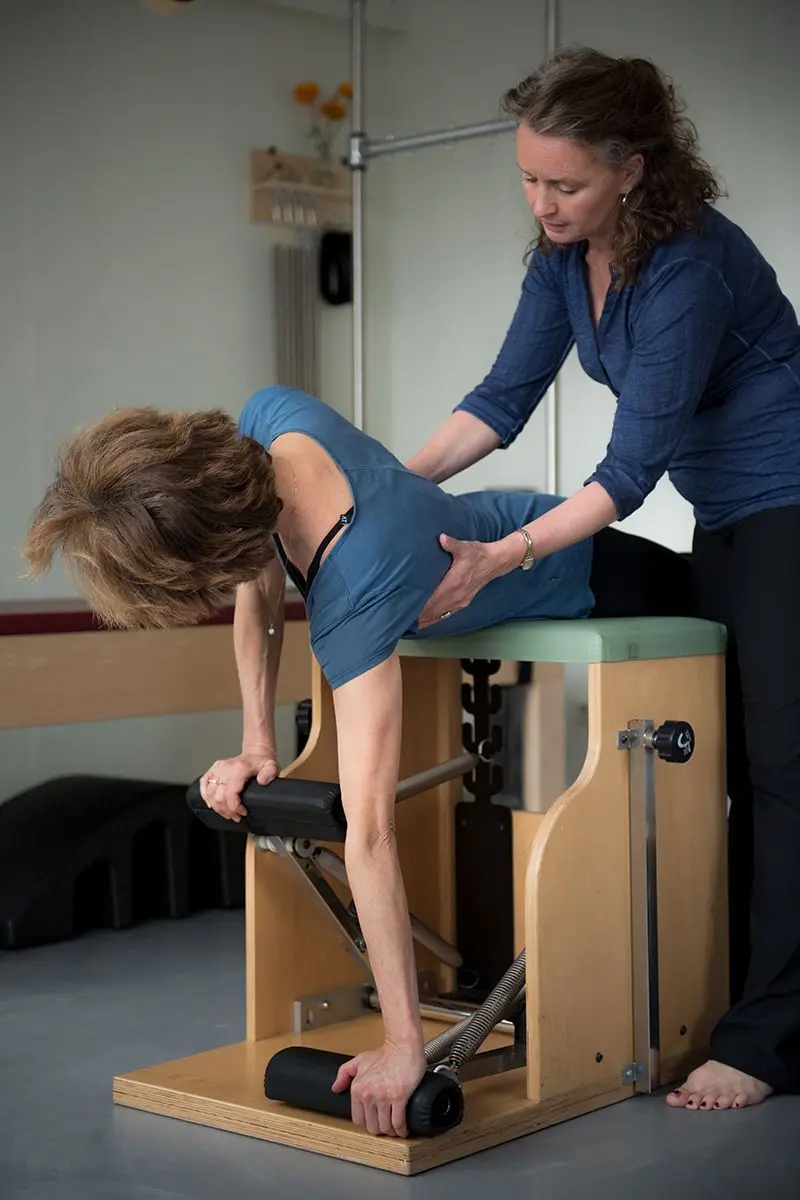
The lumbar spine moves mainly in flexion, extension and side bending. As many of our clients can be quite unaware of the possible movement in their thoracic, they tend to overlook this part of the spine especially in extension. Therefor it is so important to include exercises to increase awareness, mobility and strength in every session with your client. This can result in dramatic changes to your clients posture, breath and therefor their general well being.
As you breathe your lungs move: they increase and decrease in size. Movement of the spine can be facilitated by the use of breath. On the other hand, movement can also be restricted because of shallow or accessory breathing. Often this will come together with a stiffening in the Thoracic and the shoulder girdle, reducing the ROM in this area.
It can be useful to imagine the movement of the breath to be an initiator of movement. Also you can experiment in visualizing the movement of the lungs as initiators of movement of the spine in rotation. Does the canister move the content, or is it the other way around?
If the ribcage is used as a rigid part of the trunk, you will observe excessive movement in the cervical and lumbar spine. On top of that, it is likely that the ribs are weighing down on the lumbar/abdominnla area, which my result compression issues in those areas.
In addition one needs to consider the role of the shoulder girdle in the movement of the thoracic spine: the more free the scapulae move in relation to the ribcage, in all directions, the easier movement will transport trough the thoracic spine. Fine tuning the coördination between the scapulae, arms, ribcage pelvis and spine will optimalise the movement of the spine, thus keeping it happy to move!
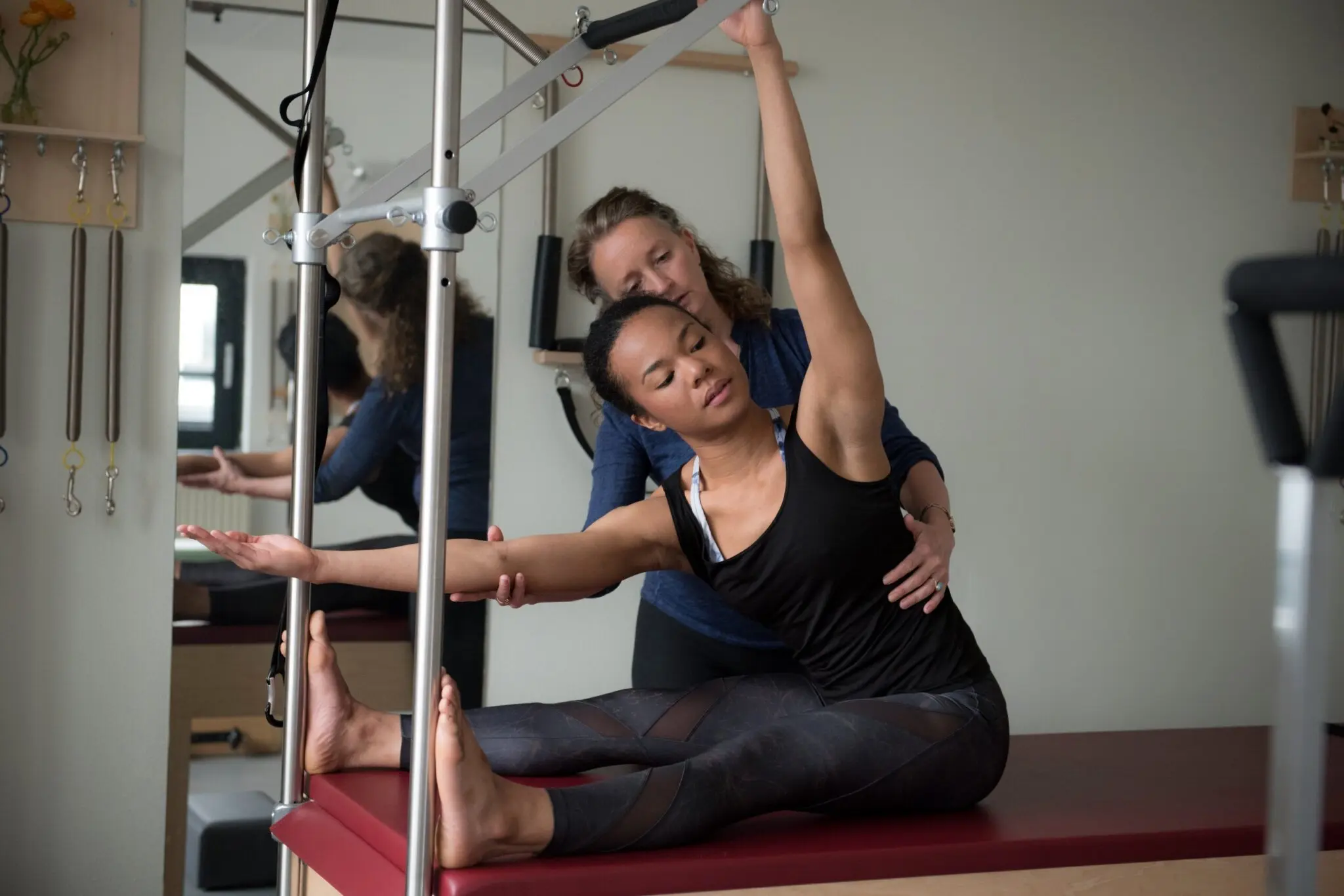
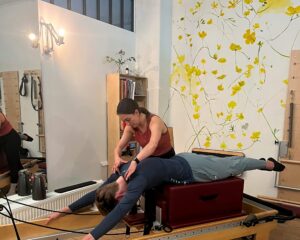
When bending to the back, we need to also have a look at the relation between the pelvis and the ribcage. As the spine and the ribs reach back, the pelvis is easily anteriorly tilted. This can also overload the lumbar spine. While doing the exercises of this workshop, it it therefor very important to keep paying attention the position of the pelvis, specifically the lengthening of the psoas, in order to develop a healthy movement pattern.



0 Comments